Klankbron 113 De muziek van Gabon van net na de Tweede Wereldoorlog
Vandaag de tweede Klankbron over de muziek van Gabon. De eerste uitzending, op 11 april, ging over de opnames die Pierre Sallée in Gabon gemaakt heeft en ook op vinyl en CD zijn uitgegeven. Vandaag gaan we luisteren naar opnamen die gemaakt zijn net na de Tweede Wereldoorlog. Het zijn archiefopnamen uit 1946 die gemaakt zijn door Gilbert Rouget en drie LP’s Anthologie de la Vie Africaine Congo-Gabon met opnamen die Herbert Pepper maakte tussen 1941 en 1956. De uitzending eindigt met een niet uitgegeven veldopname van Pierre Sallée uit 1967.
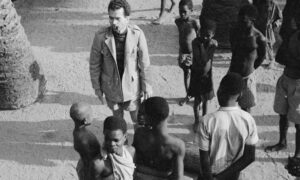 Pyral
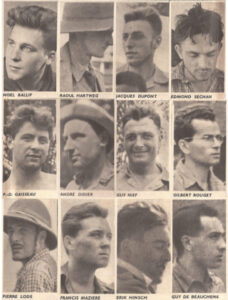
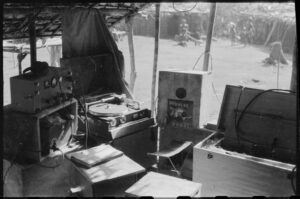
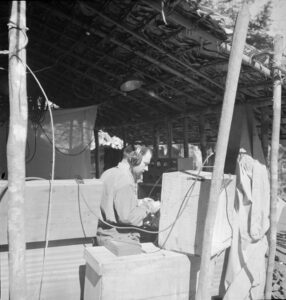
Gilbert Rouget reisde in 1946 rond door het toen nog Franse deel van Centraal Afrika met een team dat film- en geluidopnames maakten. Het geluid werd vastgelegd op Pyral platen. Met dit systeem kon men geluidsopnamen rechtstreeks op platen vastleggen en de kwaliteit daarvan was een stuk beter dan de wasrollen van voorheen. Het betekende wel een heel gesleep met apparatuur en dat moest in Gabon en Congo vaak ook nog met mankracht. Men had ook specialisten nodig zoals geluidstechnicus André Didier om de apparatuur te bedienen en zo nodig te repareren. Het deel van de opnamen dat uitgebracht werd speelde een belangrijke rol bij de eerste expositie van de Cobra kunstenaars in Amsterdam en beïnvloede zo mede de ontwikkelingen van de jaren vijftig en later.
Pyral
Gilbert Rouget reisde in 1946 rond door het toen nog Franse deel van Centraal Afrika met een team dat film- en geluidopnames maakten. Het geluid werd vastgelegd op Pyral platen. Met dit systeem kon men geluidsopnamen rechtstreeks op platen vastleggen en de kwaliteit daarvan was een stuk beter dan de wasrollen van voorheen. Het betekende wel een heel gesleep met apparatuur en dat moest in Gabon en Congo vaak ook nog met mankracht. Men had ook specialisten nodig zoals geluidstechnicus André Didier om de apparatuur te bedienen en zo nodig te repareren. Het deel van de opnamen dat uitgebracht werd speelde een belangrijke rol bij de eerste expositie van de Cobra kunstenaars in Amsterdam en beïnvloede zo mede de ontwikkelingen van de jaren vijftig en later.
 Roei- en dansliederen
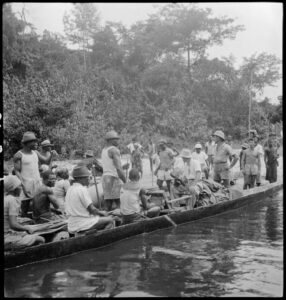
Deze klankbron begint met een vrouwendans van de Okandé. Dan volgt een opname van een van de roeiboten waarmee Rouget en gezelschap reisden. Een roeiboot met 15 man bemanning en u hoort het water, de roeispanen, de scheepsbel en de hoorn waarmee mensen gewaarschuwd worden. Het is een voorbeeld van dat ook toen al omgevingsgeluiden opgenomen werden. Het wordt gevolgd door een lied van de roeiers. Daarna een lied van de dragers die in die tijd belangrijke personen of zieken in een soort stoel met draagbaar ergens naar toe droegen. Hun rol bestond er ook uit om meer hoorbaarheid aan het bezoek van de belangrijke persoon die zij droegen te geven.
Dan komen een twee dansliederen, een mannen en vrouwen dans, met trommels als belangrijke instrumenten. Daarna 3 dansliederen waarin de sanza of mbira een prominente rol speelt. Het wordt gevolgd door 2 dansliederen waarin drums weer de belangrijkste rol spelen. Dit eerste deel sluit af met aan ritmische toespraak van de roeiboot baas tegen zijn bemanning waarin hij het heeft over de reis, de betaling, de blanken en de stroomversnellingen.
Roei- en dansliederen
Deze klankbron begint met een vrouwendans van de Okandé. Dan volgt een opname van een van de roeiboten waarmee Rouget en gezelschap reisden. Een roeiboot met 15 man bemanning en u hoort het water, de roeispanen, de scheepsbel en de hoorn waarmee mensen gewaarschuwd worden. Het is een voorbeeld van dat ook toen al omgevingsgeluiden opgenomen werden. Het wordt gevolgd door een lied van de roeiers. Daarna een lied van de dragers die in die tijd belangrijke personen of zieken in een soort stoel met draagbaar ergens naar toe droegen. Hun rol bestond er ook uit om meer hoorbaarheid aan het bezoek van de belangrijke persoon die zij droegen te geven.
Dan komen een twee dansliederen, een mannen en vrouwen dans, met trommels als belangrijke instrumenten. Daarna 3 dansliederen waarin de sanza of mbira een prominente rol speelt. Het wordt gevolgd door 2 dansliederen waarin drums weer de belangrijkste rol spelen. Dit eerste deel sluit af met aan ritmische toespraak van de roeiboot baas tegen zijn bemanning waarin hij het heeft over de reis, de betaling, de blanken en de stroomversnellingen.
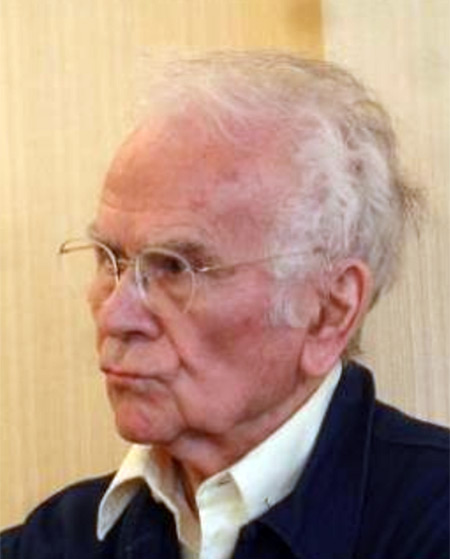
 Herbert Pepper
In het tweede deel van deze klankbron volgen een aantal nummers die Herbert Pepper heeft opgenomen in Gabon tussen 1941 en 1956. Zij zijn in 1958 uitgebracht op een drietal LP’s met de titel Anthologie de la Vie Africaine (Congo-Gabon) met erin ook uitgebreide informatie, tekeningen en foto’s. Helaas zijn het echter vaak korte fragmenten want men dacht blijkbaar toen dat er nauwelijks belangstelling voor langere opnames bestond. Zo wordt bijvoorbeeld een hele nacht durende epos door een fragment van anderhalve minuut weergegeven.
Herbert Pepper
In het tweede deel van deze klankbron volgen een aantal nummers die Herbert Pepper heeft opgenomen in Gabon tussen 1941 en 1956. Zij zijn in 1958 uitgebracht op een drietal LP’s met de titel Anthologie de la Vie Africaine (Congo-Gabon) met erin ook uitgebreide informatie, tekeningen en foto’s. Helaas zijn het echter vaak korte fragmenten want men dacht blijkbaar toen dat er nauwelijks belangstelling voor langere opnames bestond. Zo wordt bijvoorbeeld een hele nacht durende epos door een fragment van anderhalve minuut weergegeven.
 De harp
Maar eerst een gitaar danslied waarin een dansleider de bewegingen aangeeft. Een stedelijk modern lied van die tijd. Het wordt gevolgd door een fragment over de origine van de spelers van de Mvet, de harp-luit, door de bard Edou-Ada-Luc. Dat wordt weer gevolgd door een ander verhaal dat gezongen en gespeeld door Philippe Dong. Daarna komt een ode aan de Ngombi, de harp door de aanhangers van het Bwiti geloof. Voor hen is de harp een heilig instrument dat kan communiceren met de geesten en inzichten kan opleveren over wat er gebeurt en over de toekomst. Dan komt een harp lied dat gaat over de terugkeer van een dode. Het tweede deel van deze klankbron eindigt met een gesprek en pleidooi met de geest Okouyi om een uitspraak te krijgen in een lokale rechtszaak en met een hommage aan de grote meester de krokodil.
De harp
Maar eerst een gitaar danslied waarin een dansleider de bewegingen aangeeft. Een stedelijk modern lied van die tijd. Het wordt gevolgd door een fragment over de origine van de spelers van de Mvet, de harp-luit, door de bard Edou-Ada-Luc. Dat wordt weer gevolgd door een ander verhaal dat gezongen en gespeeld door Philippe Dong. Daarna komt een ode aan de Ngombi, de harp door de aanhangers van het Bwiti geloof. Voor hen is de harp een heilig instrument dat kan communiceren met de geesten en inzichten kan opleveren over wat er gebeurt en over de toekomst. Dan komt een harp lied dat gaat over de terugkeer van een dode. Het tweede deel van deze klankbron eindigt met een gesprek en pleidooi met de geest Okouyi om een uitspraak te krijgen in een lokale rechtszaak en met een hommage aan de grote meester de krokodil.
 Bwiti
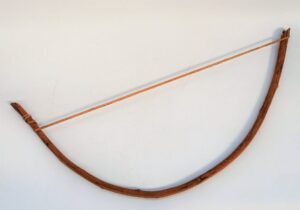
Deze klankbron eindigt met het begin van een Bwiti seance opgenomen door Pierre Sallée in 1967 waarin een muziekboog een prominente rol speelt.
Bwiti
Deze klankbron eindigt met het begin van een Bwiti seance opgenomen door Pierre Sallée in 1967 waarin een muziekboog een prominente rol speelt.
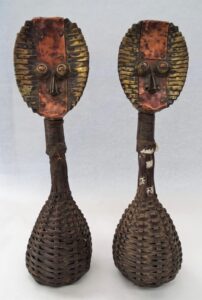 Playlist
01 Danse des F Okande Eniga Bwende 2 1’05 1’05
Singers and choir female with copper bells attached to their belts, 3 drums played by 2 men
Recorded on Pyral Disc by a team led by Gilbert Rouget, 1946
Location Boue, Achuka in Gabon
Culture Okandé
https://archives.crem-cnrs.fr/archives/items/CNRSMH_I_1974_013_048_03/
Playlist
01 Danse des F Okande Eniga Bwende 2 1’05 1’05
Singers and choir female with copper bells attached to their belts, 3 drums played by 2 men
Recorded on Pyral Disc by a team led by Gilbert Rouget, 1946
Location Boue, Achuka in Gabon
Culture Okandé
https://archives.crem-cnrs.fr/archives/items/CNRSMH_I_1974_013_048_03/
 02 Chant des piroguiers 8 ambiance, trompe 2’28 4’33
Recorded on Pyral Disc by a team led by Gilbert Rouget, 1946
Location Lastourville
Culture Baduma
https://archives.crem-cnrs.fr/archives/items/CNRSMH_I_1974_013_043_08/
It is a part of the rowing songs recorded by Rouget at this time. One can hear the oars in the water, the sound of the horn of the antelope, the iron bells which are hung in the front of the boat and the crew of 15 members while going down the river.
02 Chant des piroguiers 8 ambiance, trompe 2’28 4’33
Recorded on Pyral Disc by a team led by Gilbert Rouget, 1946
Location Lastourville
Culture Baduma
https://archives.crem-cnrs.fr/archives/items/CNRSMH_I_1974_013_043_08/
It is a part of the rowing songs recorded by Rouget at this time. One can hear the oars in the water, the sound of the horn of the antelope, the iron bells which are hung in the front of the boat and the crew of 15 members while going down the river.
 02 Chant des piroguiers 8 ambiance, trompe 2’28 4’33
Recorded on Pyral Disc by a team led by Gilbert Rouget, 1946
Location Lastourville
Culture Baduma
https://archives.crem-cnrs.fr/archives/items/CNRSMH_I_1974_013_043_08/
It is one of the many rowing songs recorded by Rouget at this time. One can hear the oars in the water, the sound of the horn of the antelope, the iron bells which are hung in the front of the boat and the crew of 15 members while going down the river.
02 Chant des piroguiers 8 ambiance, trompe 2’28 4’33
Recorded on Pyral Disc by a team led by Gilbert Rouget, 1946
Location Lastourville
Culture Baduma
https://archives.crem-cnrs.fr/archives/items/CNRSMH_I_1974_013_043_08/
It is one of the many rowing songs recorded by Rouget at this time. One can hear the oars in the water, the sound of the horn of the antelope, the iron bells which are hung in the front of the boat and the crew of 15 members while going down the river.
 03 Chant des piroguiers 10 4’01 8’34
Recorded on Pyral Disc by a team led by Gilbert Rouget, 1946
15 crew members and singers.
Location Lastourville
culture Baduma
https://archives.crem-cnrs.fr/archives/items/CNRSMH_I_1974_013_043_10/
One can still hear the water, bells and oars while they are singing.
03 Chant des piroguiers 10 4’01 8’34
Recorded on Pyral Disc by a team led by Gilbert Rouget, 1946
15 crew members and singers.
Location Lastourville
culture Baduma
https://archives.crem-cnrs.fr/archives/items/CNRSMH_I_1974_013_043_10/
One can still hear the water, bells and oars while they are singing.
 04 Chant des tipoyeurs 5a 2’29 11’03
10 carriers of people of importance or sick ones. They were carried while sitting in a kind of chair.
Location Lastourville
Culture Bawandji (ou Awandji, Baouandji)
Recorded on Pyral Disc by a team led by Gilbert Rouget, 1946
https://archives.crem-cnrs.fr/archives/items/CNRSMH_I_1974_013_045_10/
The songs of the tipoyeurs were different from the usual porters of goods. They had with their singing also to impress the people where they arrived or passed of the importance of the one they carried.
04 Chant des tipoyeurs 5a 2’29 11’03
10 carriers of people of importance or sick ones. They were carried while sitting in a kind of chair.
Location Lastourville
Culture Bawandji (ou Awandji, Baouandji)
Recorded on Pyral Disc by a team led by Gilbert Rouget, 1946
https://archives.crem-cnrs.fr/archives/items/CNRSMH_I_1974_013_045_10/
The songs of the tipoyeurs were different from the usual porters of goods. They had with their singing also to impress the people where they arrived or passed of the importance of the one they carried.
 05 Danse des Bawumbu 2 Basebam 3’25 14’28
3 Nzinzi (drums), Nguta (rattles), Masoku (bells), mixed choir and singers
Location Franceville, Mounzai
Culture Bawumbu
Recorded on Pyral Disc by a team led by Gilbert Rouget, 1946
https://archives.crem-cnrs.fr/archives/items/CNRSMH_I_1974_013_041_06/
The singers and dancers are paint as for a funeral. The song is about going to fish and catch a lot.
05 Danse des Bawumbu 2 Basebam 3’25 14’28
3 Nzinzi (drums), Nguta (rattles), Masoku (bells), mixed choir and singers
Location Franceville, Mounzai
Culture Bawumbu
Recorded on Pyral Disc by a team led by Gilbert Rouget, 1946
https://archives.crem-cnrs.fr/archives/items/CNRSMH_I_1974_013_041_06/
The singers and dancers are paint as for a funeral. The song is about going to fish and catch a lot.
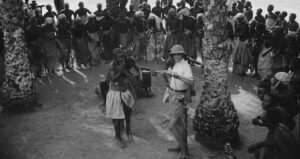 06 Danse Mawakue 2 3’34 18’02
1 female singer, 4 men choir, 2 drums, bells, sticks
Location Lastourville, Mukumamuyabi
Culture Shake
Recorded on Pyral Disc by a team led by Gilbert Rouget, 1946
https://archives.crem-cnrs.fr/archives/items/CNRSMH_I_1974_013_044_01/
Women danse, the main singer has the face painted white and red and white suns painted on her shoulder and while dancing she also directs the drummers and choir with a wooden sculpted andromorphic handle. The musicians were called up by the district commissioner.
06 Danse Mawakue 2 3’34 18’02
1 female singer, 4 men choir, 2 drums, bells, sticks
Location Lastourville, Mukumamuyabi
Culture Shake
Recorded on Pyral Disc by a team led by Gilbert Rouget, 1946
https://archives.crem-cnrs.fr/archives/items/CNRSMH_I_1974_013_044_01/
Women danse, the main singer has the face painted white and red and white suns painted on her shoulder and while dancing she also directs the drummers and choir with a wooden sculpted andromorphic handle. The musicians were called up by the district commissioner.
 07 Danse Mawunda 1 3’59 22’01
Patrice Mabuedi - voice, 4 Marombe idiophone instruments, 1 Sanzi (lamellophone), Malulu and Gota rattles
Location Kankan
Culture Baduma
Recorded on Pyral Disc by a team led by Gilbert Rouget, 1946
https://archives.crem-cnrs.fr/archives/items/CNRSMH_I_1974_013_046_09/
It is dance with the men sitting on the ground and move only their torso, head and hands. The sanzi has 10 metal blades with a small metal ring glued to the body of the instrument which causes the buzzing sound. The marombe are 4 tubes of bamboo of a different length and closed on one side. One hits the ground with the open side while opening or closing the hole. The Malulu consists of 3 small calabashes filled with grains and threaded along a stick which serves as a handle and is combined with a Gota rattle.
07 Danse Mawunda 1 3’59 22’01
Patrice Mabuedi - voice, 4 Marombe idiophone instruments, 1 Sanzi (lamellophone), Malulu and Gota rattles
Location Kankan
Culture Baduma
Recorded on Pyral Disc by a team led by Gilbert Rouget, 1946
https://archives.crem-cnrs.fr/archives/items/CNRSMH_I_1974_013_046_09/
It is dance with the men sitting on the ground and move only their torso, head and hands. The sanzi has 10 metal blades with a small metal ring glued to the body of the instrument which causes the buzzing sound. The marombe are 4 tubes of bamboo of a different length and closed on one side. One hits the ground with the open side while opening or closing the hole. The Malulu consists of 3 small calabashes filled with grains and threaded along a stick which serves as a handle and is combined with a Gota rattle.
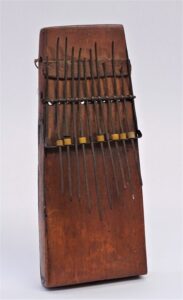 08 Chant de danse 2 Sere 4’23 26’24
Patrice Mabuedi – voice, 2 rattles, 1 sanzi
Location Kankan
culture Baduma
Recorded on Pyral Disc by a team led by Gilbert Rouget, 1946
https://archives.crem-cnrs.fr/archives/items/CNRSMH_I_1974_013_047_03/
Festive dance, recorded out of context
08 Chant de danse 2 Sere 4’23 26’24
Patrice Mabuedi – voice, 2 rattles, 1 sanzi
Location Kankan
culture Baduma
Recorded on Pyral Disc by a team led by Gilbert Rouget, 1946
https://archives.crem-cnrs.fr/archives/items/CNRSMH_I_1974_013_047_03/
Festive dance, recorded out of context
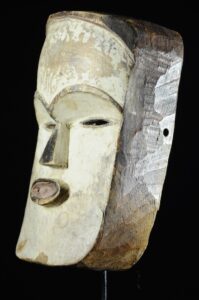 09 Danse Mawunda 5 3’07 29’31
Patrice Mabuedi – voice, 2 rattles, 1 sanzi, 4 Marombe, the choir were the rowers
Location Kankan
Culture Baduma
Recorded on Pyral Disc by a team led by Gilbert Rouget, 1946
https://archives.crem-cnrs.fr/archives/items/CNRSMH_I_1974_013_047_06/
Sitting dance.
09 Danse Mawunda 5 3’07 29’31
Patrice Mabuedi – voice, 2 rattles, 1 sanzi, 4 Marombe, the choir were the rowers
Location Kankan
Culture Baduma
Recorded on Pyral Disc by a team led by Gilbert Rouget, 1946
https://archives.crem-cnrs.fr/archives/items/CNRSMH_I_1974_013_047_06/
Sitting dance.
 10 Chant de danse 1 Mupenga 2’45 32’16
4 drums, rattles, sticks, bells, 5 dancers, 1 singer, 1 whistle
https://archives.crem-cnrs.fr/archives/items/CNRSMH_I_1974_013_044_10/
Location Lastourville
Culture Bawandji (ou Awandji, Baouandji)
Recorded on Pyral Disc by a team led by Gilbert Rouget, 1946
https://archives.crem-cnrs.fr/archives/items/CNRSMH_I_1974_013_044_10/
Dance of men, out of context
10 Chant de danse 1 Mupenga 2’45 32’16
4 drums, rattles, sticks, bells, 5 dancers, 1 singer, 1 whistle
https://archives.crem-cnrs.fr/archives/items/CNRSMH_I_1974_013_044_10/
Location Lastourville
Culture Bawandji (ou Awandji, Baouandji)
Recorded on Pyral Disc by a team led by Gilbert Rouget, 1946
https://archives.crem-cnrs.fr/archives/items/CNRSMH_I_1974_013_044_10/
Dance of men, out of context
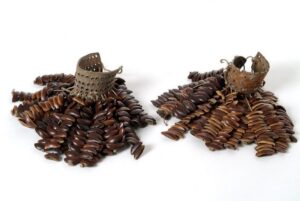 11 Danse des F Okande 3 Mapese 3’06 35’22
1 female singer, 3 drums played by 2 men, bells are attached to the belt of the dancers
Location Boue, Achuka
Culture Okandé
Recorded on Pyral Disc by a team led by Gilbert Rouget, 1946
https://archives.crem-cnrs.fr/archives/items/CNRSMH_I_1974_013_048_05/
Dance of women and young girls led by a dance mistress who also directs the drum players. She is also the one who sings the introduction.
11 Danse des F Okande 3 Mapese 3’06 35’22
1 female singer, 3 drums played by 2 men, bells are attached to the belt of the dancers
Location Boue, Achuka
Culture Okandé
Recorded on Pyral Disc by a team led by Gilbert Rouget, 1946
https://archives.crem-cnrs.fr/archives/items/CNRSMH_I_1974_013_048_05/
Dance of women and young girls led by a dance mistress who also directs the drum players. She is also the one who sings the introduction.
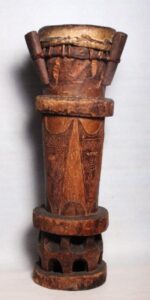 12 Discours du chef de pirogue b 3’37 38’59
Pierre Moignon – main voice and leader of the rowing boat
Location Lambaréné
Culture Okandé
Recorded on Pyral Disc by a team led by Gilbert Rouget, 1946
https://archives.crem-cnrs.fr/archives/items/CNRSMH_I_1974_013_051_09/
The story goes about the journey, the payment, the white people, his brother, the commands and the rapids. Part in Okandé part in French.
12 Discours du chef de pirogue b 3’37 38’59
Pierre Moignon – main voice and leader of the rowing boat
Location Lambaréné
Culture Okandé
Recorded on Pyral Disc by a team led by Gilbert Rouget, 1946
https://archives.crem-cnrs.fr/archives/items/CNRSMH_I_1974_013_051_09/
The story goes about the journey, the payment, the white people, his brother, the commands and the rapids. Part in Okandé part in French.
 13 Danse de divertissement Danse assiko-mendjang 2’51 42’50
Anthologie de la Vie Africaine (Congo-Gabon)
Disques Ducretet-Thomson 320 C 126, A 26
Location Oyem
Culture Fang
recorded Herbert Pepper
https://archives.crem-cnrs.fr/archives/items/CNRSMH_E_1959_002_004_001_26/
13 Danse de divertissement Danse assiko-mendjang 2’51 42’50
Anthologie de la Vie Africaine (Congo-Gabon)
Disques Ducretet-Thomson 320 C 126, A 26
Location Oyem
Culture Fang
recorded Herbert Pepper
https://archives.crem-cnrs.fr/archives/items/CNRSMH_E_1959_002_004_001_26/
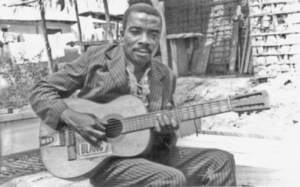 14 Aupres d'un atiste musicien-poète 1’23 44’13
Edou-Ada-Luc
Anthologie de la Vie Africaine (Congo-Gabon)
Disques Ducretet-Thomson 320 C 126, B 16
Location Bitam, Woleu-Ntem
Culture Fang
https://archives.crem-cnrs.fr/archives/items/CNRSMH_E_1959_002_004_001_42/
Mvet -- Harp-luth. About the origin of the Mvet players
14 Aupres d'un atiste musicien-poète 1’23 44’13
Edou-Ada-Luc
Anthologie de la Vie Africaine (Congo-Gabon)
Disques Ducretet-Thomson 320 C 126, B 16
Location Bitam, Woleu-Ntem
Culture Fang
https://archives.crem-cnrs.fr/archives/items/CNRSMH_E_1959_002_004_001_42/
Mvet -- Harp-luth. About the origin of the Mvet players
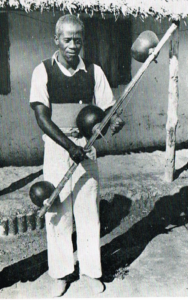 15 Epopée d’Ovang-obamo-ndong et ses guerriers 1’27 45’40
chez les immortels (avec harpe-cithare) a
Philippe Dong – voice, mvet, audience plays the sticks
Anthologie de la Vie Africaine (Congo-Gabon)
Disques Ducretet-Thomson 320 C 128 A 8
Culture Fang
recorded Herbert Pepper
https://archives.crem-cnrs.fr/archives/items/CNRSMH_E_1959_002_004_003_08/
The epic Ovang-obamo-ndong goes about how he and his people try to steal the immortality from the kingdom of Engong.
15 Epopée d’Ovang-obamo-ndong et ses guerriers 1’27 45’40
chez les immortels (avec harpe-cithare) a
Philippe Dong – voice, mvet, audience plays the sticks
Anthologie de la Vie Africaine (Congo-Gabon)
Disques Ducretet-Thomson 320 C 128 A 8
Culture Fang
recorded Herbert Pepper
https://archives.crem-cnrs.fr/archives/items/CNRSMH_E_1959_002_004_003_08/
The epic Ovang-obamo-ndong goes about how he and his people try to steal the immortality from the kingdom of Engong.
 16 Louanges a la harpe sacrée Ngombi 2’59 48’39
Ngombi (harp), Obaka ( rhythm instrument made from palm leaf veins stuck in the ground)
Anthologie de la Vie Africaine (Congo-Gabon)
Disques Ducretet-Thomson 320 C 127 B 11
Location Bahoumbou
Culture Fang
recorded Herbert Pepper
https://archives.crem-cnrs.fr/archives/items/CNRSMH_E_1959_002_004_002_25/
Bwiti religion in Mitsogo language. The Ngombi harp is considered a sacred instrument and every string has special properties. This is a song directed to the harp.
16 Louanges a la harpe sacrée Ngombi 2’59 48’39
Ngombi (harp), Obaka ( rhythm instrument made from palm leaf veins stuck in the ground)
Anthologie de la Vie Africaine (Congo-Gabon)
Disques Ducretet-Thomson 320 C 127 B 11
Location Bahoumbou
Culture Fang
recorded Herbert Pepper
https://archives.crem-cnrs.fr/archives/items/CNRSMH_E_1959_002_004_002_25/
Bwiti religion in Mitsogo language. The Ngombi harp is considered a sacred instrument and every string has special properties. This is a song directed to the harp.
 17 Au-dela de la mort choeur sur un revenant 2’01 50’40
(du rite kondjo)
Female voice, Ngombi (harp), 2 Ngomwa (drums), 1 wooden small bench as percussion instrument
Anthologie de la Vie Africaine (Congo-Gabon)
Disques Ducretet-Thomson 320 C 128, B 18
Location Lambaréné
Culture Nkomi
recorded Herbert Pepper
https://archives.crem-cnrs.fr/archives/items/CNRSMH_E_1959_002_004_003_28/
Kondjo ritual association a song on the dead who come back
17 Au-dela de la mort choeur sur un revenant 2’01 50’40
(du rite kondjo)
Female voice, Ngombi (harp), 2 Ngomwa (drums), 1 wooden small bench as percussion instrument
Anthologie de la Vie Africaine (Congo-Gabon)
Disques Ducretet-Thomson 320 C 128, B 18
Location Lambaréné
Culture Nkomi
recorded Herbert Pepper
https://archives.crem-cnrs.fr/archives/items/CNRSMH_E_1959_002_004_003_28/
Kondjo ritual association a song on the dead who come back
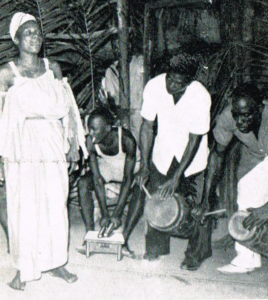 18 Dialogue avec l'esprit 3’02 53’42
voice of the spirit, a choir of men, Engama, Ngoma, Ebanjouna drums, Owaka palm leaf percussion, mirliton, kreten
Anthologie de la Vie Africaine (Congo-Gabon)
Disques Ducretet-Thomson 320 C 127 B 16
Location Lambaréné
Culture Galoa
recorded Herbert Pepper
https://archives.crem-cnrs.fr/archives/items/CNRSMH_E_1959_002_004_002_30/
Dialogue with the spirit Okouyi and a song directed to the crocodile by someone who want to ask for a judgement of the spirit on a matter and a hommage to the great master the crocodile.
18 Dialogue avec l'esprit 3’02 53’42
voice of the spirit, a choir of men, Engama, Ngoma, Ebanjouna drums, Owaka palm leaf percussion, mirliton, kreten
Anthologie de la Vie Africaine (Congo-Gabon)
Disques Ducretet-Thomson 320 C 127 B 16
Location Lambaréné
Culture Galoa
recorded Herbert Pepper
https://archives.crem-cnrs.fr/archives/items/CNRSMH_E_1959_002_004_002_30/
Dialogue with the spirit Okouyi and a song directed to the crocodile by someone who want to ask for a judgement of the spirit on a matter and a hommage to the great master the crocodile.
 19 Debut de la Seance de Kosi 9’46 64’28
Mouth bow, percussion
https://archives.crem-cnrs.fr/archives/items/CNRSMH_I_2007_010_059_03/
Location Komi
Culture Tsogho or Mitsogho
recorded by Pierre Sallée, 1967
Séance with and at François Kosi
19 Debut de la Seance de Kosi 9’46 64’28
Mouth bow, percussion
https://archives.crem-cnrs.fr/archives/items/CNRSMH_I_2007_010_059_03/
Location Komi
Culture Tsogho or Mitsogho
recorded by Pierre Sallée, 1967
Séance with and at François Kosi
- Broadcasted on
- vr. 9 mei 2025
- vr. 16 mei 2025